Weed Control J 2021; 20: e202100764
Sourgrass phenological stage and efficacy of glufosinate-ammonium
DOI: 10.7824/wcj.2021;20:00764
Abstract
Background
Recently, biotypes of sourgrass (Digitaria insularis) were identified in Brazil with multiple resistance to EPSPs-ACCase inhibiting herbicides, which demands the recommendation of herbicides with alternative mode of action, such as glufosinate-ammonium.
Objective
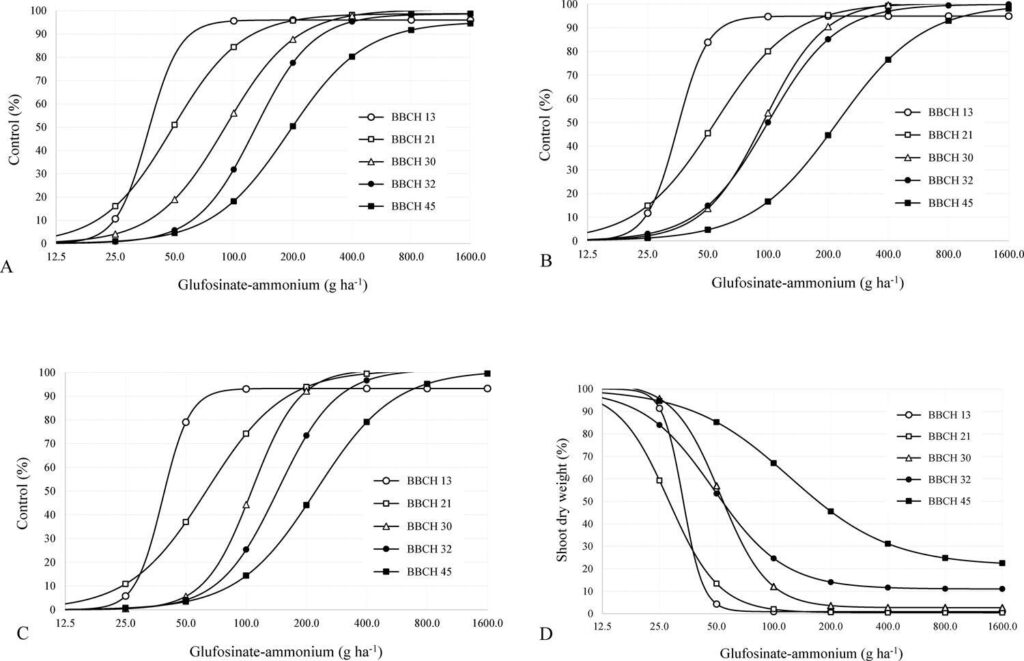
Therefore, this work was developed with the objective of modelling the efficacy of glufosinate-ammonium on sourgrass regarding to five different phenological stages.
Methods
Treatments consisted of eight rates of glufosinate-ammonium (1,600, 800, 400, 200, 100, 50 and 25 g ha-1, and check plots without herbicide application) and five phenological stages of sourgrass. Percentage control was evaluated at 14, 21 and 28 days after application (DAA), as well as shoot dry weight at 28 DAA.
Results
The more developed sourgrass plants were, the higher doses of glufosinate-ammonium were needed to achieve satisfactory control. Plants with three leaves were easily controlled by glufosinate-ammonium, once adequate control was reached with rates lower than 100 g ha-1. If tillering stage is reached, higher doses were necessary to promote adequate control, of about 200 g ha-1. Doses above 400 g ha-1 were necessary to reach adequate control of pre-flowering plant. Conclusions: Glufosinate-ammonium is an excellent alternative for controlling sourgrass, however a second herbicide may be necessary for applications after tillering. Strong relation between sourgrass phenological development and increasing necessary rates of glufosinate-ammonium was identified.
Keywords: Digitaria insularis; glutamine synthetase; growth; modelling
1,337