Weed Control J 2025; 24: e202500882
Weed control and fitosociology in cassava under pre-emergent herbicides and root quality
DOI: 10.7824/wcj.2025;24:00882
Abstract:
Background:
Cassava (Manihot esculenta) is native from Brazil, widely cultivated across the country, and is the third largest source of food in the Brazilian tropical regions. Mechanical weeding is commonly used for weed control in cassava, which can be associated with herbicides.
Objective:
To evaluate the weed control, phytosociology, yield, and sensory analysis of cassava treated with pre-emergent herbicides.
Methods:
Two field experiments were conducted, with a randomized block design and four replications. The treatments consisted of the herbicides Smetolachlor, metribuzin, and clomazone applied after the planting of cassava cuttings, with additional weeding and weed-infested controls. The evaluation included weed control and phytosociology, plant height, number of leaves, and cassava yield. The roots were peeled and subjected to sensory evaluation using a multiple comparison discriminative test.
Results:
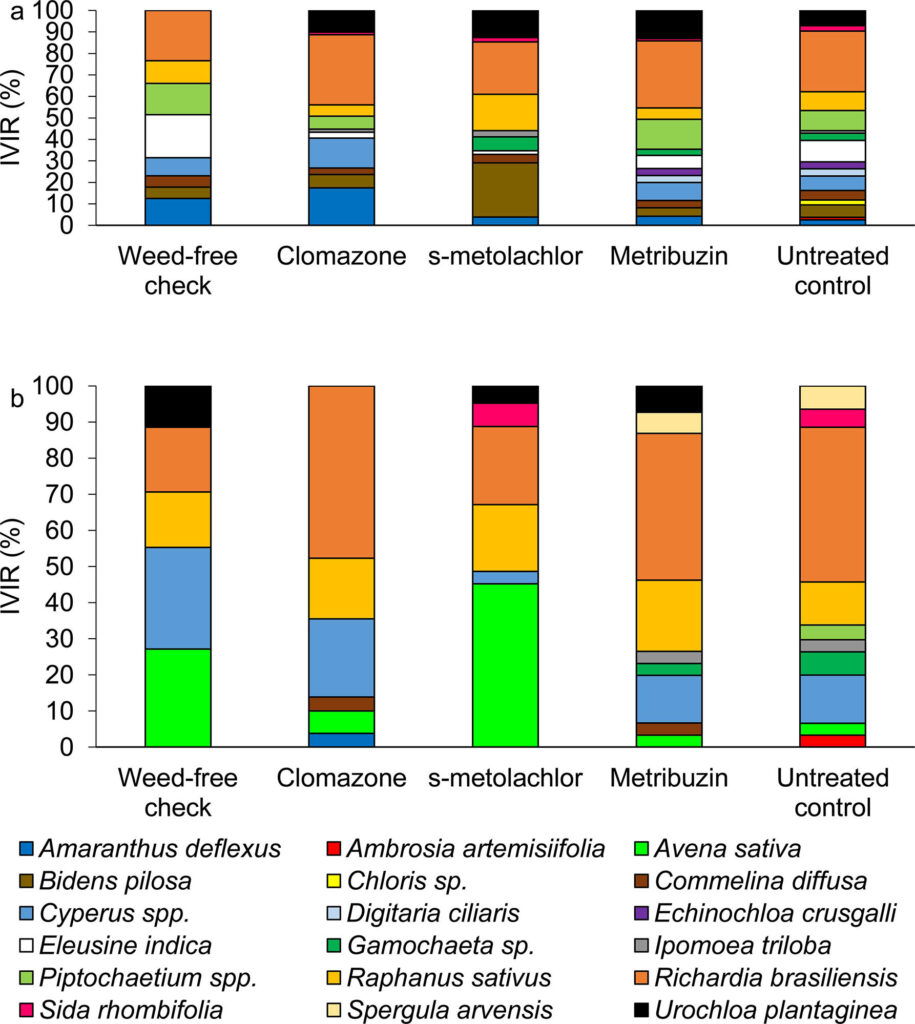
The herbicides were effective in controlling most weeds, affecting phytosociology during cassava growth. Richardia brasiliensis was the most important weed specie when using clomazone and metribuzin. A significant improve in cassava yield was obtained when pre-emergent was applied, likewise at sensory root quality.
Conclusions:
There is a difference in the control spectrum among herbicides, which leads to variations in the phytosociology of weed species. The importance value index for Richardia brasiliensis was higher for clomazone and metribuzin. The number of leaves per plant, plant height, cassava yield, and quality were greater in the herbicide-treated and weeding treatments compared to the untreated control.
89