Weed Control J 2023; 22: e202300824
Susceptibility of non-tolerant soybean to low rates of dicamba
DOI: 10.7824/wcj.2023;22:00824
Abstract:
Background:
The possibility of intoxicating non-tolerant soybean with dicamba is an important and currently problematic in agricultural fields.
Objective:
Six experiments were carried out to evaluate the correlation between toxicity of low dicamba rates and yield of non-tolerant soybean cultivars.
Methods:
Three areas were selected and two experiments were carried out in each area: one for soybean at V3 and another for R1/R2 stage. Five dicamba rates (five treatments) were applied in each experiment. Toxicity was evaluated at 7, 14, 21, and 28 days after application; the others variables evaluated were plant stand, pre-harvest plant height, production components, and crop yield. Additionally, the maximum toxicity was correlated to the relative yield for each plot.
Results:
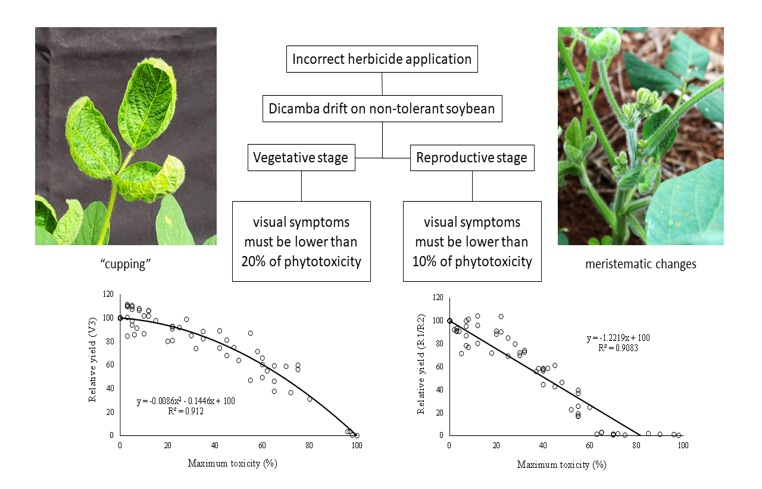
The dicamba rate of 1 g ha-1 was a critical threshold to distinguish rates that caused only phytotoxicity from those that decreased crop yield. Visual toxicity symptoms that did not cause meristematic changes (up to 20% in plants at vegetative stage and 10% in plants at reproductive stage) did not decrease soybean yield.
Conclusion:
The correlation between dicamba toxicity and soybean crop yield is the most important factor to be considered under field conditions. Soybean plants sprayed at reproductive stage (R1/R2) had higher yield losses than at vegetative stage: each 10% increase in phytotoxicity in soybeans at R1/R2 would result, on average, in 12.2% yield loss.
Keywords: drift; hormonal herbicides; toxicity; yield
Infographics
395